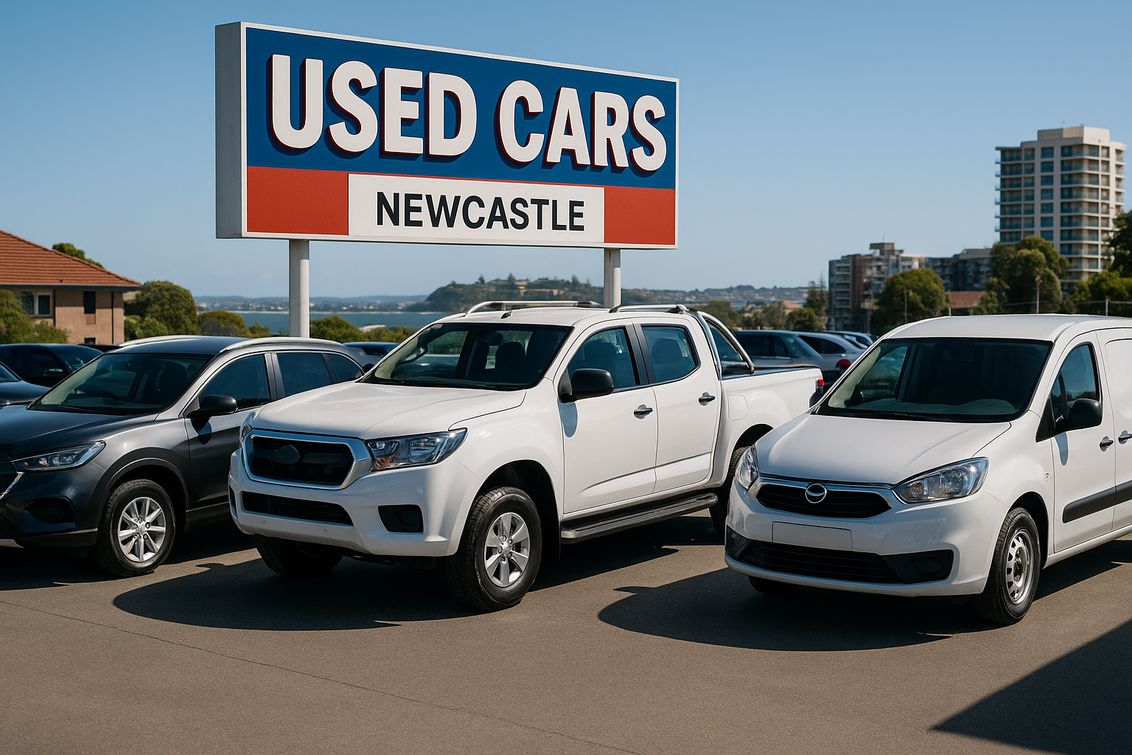
Used Cars Newcastle
Estimated reading time: 13 minutes
Key takeaways
- Match body style and fuel type to your actual Newcastle and Hunter driving.
- Set a total budget including on-road and running costs; consider pre-approval.
- Prioritise safety features, maintenance history, and overall condition.
- Use a structured inspection checklist and an honest test drive route.
- Verify history, servicing, and legal limits for towing, payload, and roof loads.
- Choose dealer or private sale based on support needed; leverage trade-in and finance if it helps the deal.
Table of contents
- Used Cars Newcastle
- Why buying used makes sense in Newcastle
- Set your plan: budget, needs, and short-list
- The right body style for Newcastle roads
- Powertrain choices: petrol, diesel, hybrid, EV
- Make a smart budget (and stick to it)
- Safety and driver-assist tech to consider
- How to inspect a used car (simple checklist)
- The Newcastle test drive route that tells the truth
- Paperwork, history, and peace of mind
- Towing, payload, and roof loads
- Utes and vans: tradie and business tips
- Family cars: comfort, safety, and space
- Buying from a dealer vs private seller
- Trade-in: make your current car work harder for you
- Simple negotiation tips that feel respectful
- Common red flags to slow down and check
- How GoCarzSales can help
- Bringing it all together
- Call to Action
- Important Disclaimer
- FAQ: used cars in Newcastle
Why buying used makes sense in Newcastle
Looking for used cars in Newcastle? Check out our used car sales Newcastle guide. This guide will help you shop smart, compare options, and find the right second-hand vehicle for life around the Hunter.
Newcastle is a mix of city streets, coastal runs, and country trips. That means the “best” used vehicle depends on your daily drive. Whether you’re after a small city car, a family SUV, a tradie ute, a delivery van, or a people mover, this article breaks down what to choose, how to inspect, and how to budget with confidence.
Buying second-hand can offer strong value. You avoid the biggest hit on depreciation and can often step up a size or trim level for less than new.
In Newcastle, many drivers want a practical all-rounder. Think easy to park in the CBD, but steady on the Pacific Highway and into the Hunter. Others need payload and towing for tools, trailers, or boats. If you choose well, a used car can give you years of safe, reliable service without over-stretching your budget.
Set your plan: budget, needs, and short-list
Before you start browsing our car buying guide, map out three things:
- Your budget, including running costs.
- Your daily needs: seats, cargo, towing, and where you drive.
- Your short-list: two or three body styles that fit.
A clear plan stops impulse buys. It makes test drives easier and keeps you focussed on what matters: safety, condition, service history, and total value.
The right body style for Newcastle roads
Different body styles suit different lifestyles. Here’s a quick guide.
- Small hatch or compact sedan (see the Hyundai i30 used buying guide)
- Best for: city streets, student or first car, commuting, tight parking.
- Pros: easy to drive, lower fuel use and tyres, simpler to service.
- Watch for: cabin and boot space if you carry passengers or equipment.
- Mid-size or large sedan
- Best for: longer trips up the coast or inland, comfortable highway cruising.
- Pros: stable at speed, decent boot space, often better value used than SUVs.
- Watch for: ground clearance on rough car parks or unsealed lanes.
- Small or mid-size SUV (see the Mitsubishi Outlander used guide)
- Best for: mixed driving, families, weekends away, light trails.
- Pros: extra ride height, flexible seating, popular features.
- Watch for: higher centre of gravity and potentially higher tyre costs.
- 4×4 wagon or dual-cab ute
- Best for: tradie work, towing, camping, beach or bush access (where allowed).
- Pros: payload options, low-range in some models, accessories available.
- Watch for: condition from heavy use, towing wear, and regular servicing.
- Vans and minibuses
- Best for: couriers, trades, community groups, team transport.
- Pros: big cargo or passenger space, sliding doors, shelving potential.
- Watch for: roof height and parking limits, service history for commercial use. used vans
- Light trucks and cab-chassis
- Best for: serious payload, fleet or growing businesses.
- Pros: tray and body options, built for work.
- Watch for: compliance plates, load limits, and maintenance costs. used trucks for sale
Powertrain choices: petrol, diesel, hybrid, EV
- Petrol: Simple, common, and often cheaper to maintain. Good for short trips.
- Diesel: Strong torque for towing and loads. Diesels like regular highway runs. If you mostly do short trips, ask about how the vehicle manages soot build-up and the diesel particulate filter.
- Hybrid: Low fuel use in city stop-start traffic. Smooth and quiet. Check battery health and service history.
- EV: Buy used BYD in Australia guide. Great for local driving with home charging. Consider range, charging options near Newcastle, and tyre wear from torque. If you often drive long distances, plan your charging ahead.
Choose the fuel type that matches how you actually drive, not how you hope to drive one or two weekends a year.
Make a smart budget (and stick to it)
Your purchase price is only the start. Plan for:
- Registration and stamp duty.
- Insurance (Comprehensive and Compulsory Third Party).
- Servicing and repairs (including timing belts, fluids, and filters).
- Tyres, brakes, and suspension parts.
- Fuel or charging costs.
- Accessories you need now, not “maybe later.”
A clear budget helps you compare vehicles with confidence. Consider getting pre-approval if you’re exploring finance to understand repayments and total cost. finance options
Safety and driver-assist tech to consider
Safety matters on city streets and on the highway. When comparing cars, look for:
- Strong crash protection and multiple airbags.
- Stability and traction control.
- Anti-lock brakes.
- Reversing camera and parking sensors.
- Advanced driver assists like AEB (auto emergency braking), blind-spot warning, and lane support where available.
Older models may not have all features, but a good combination of core safety systems, tyres in excellent condition, and well-maintained brakes can make a big difference.
How to inspect a used car (simple checklist)
A careful inspection protects your wallet. Read our things to know when buying a used car and use a simple checklist to stay on track. vehicle inspection checklist
Exterior and body:
- Walk around the car in good light.
- Look for uneven panel gaps, mismatched paint, overspray, or rust.
- Check the windscreen for chips and all lights for cracks or moisture.
- Inspect tyres for even wear and adequate tread on all four corners (and the spare).
Interior:
- Check seats, belts, and child-seat anchors.
- Test all switches, windows, and infotainment.
- Run the air-con and heater.
- Look and smell for dampness (possible leaks) or heavy wear.
Under the bonnet:
- Look for clean, even fluid levels (oil, coolant, brake, power steering if fitted).
- Check for leaks, perished hoses, cracked belts, or corrosion.
- Ask about the timing belt or chain service item for the model.
Under the car:
- Look for leaks, damaged exhausts, or fresh underbody paint that could hide repairs.
- Check towbar fitment and wiring if fitted.
Keys and accessories:
- Confirm two working keys/remotes.
- Ensure logbooks, manuals, and any service receipts are present.
If you are unsure, consider a pre-purchase inspection by a qualified mechanic. They can spot issues you might miss.
The Newcastle test drive route that tells the truth
A good test drive shows how the car behaves in real life. Aim to include:
- Cold start and idle while you listen for noises or rough running.
- Low-speed city streets to check steering feel and suspension over bumps.
- A hill start to test clutch take-up (if manual) and torque delivery.
- A steady highway run to check stability, wind noise, and transmission shifts.
- Braking tests in a safe, legal place to feel for pulling, vibration, or fade.
- Tight parking to test turning circle and visibility.
Trust your senses. A car should feel settled, brake straight, and shift cleanly.
Paperwork, history, and peace of mind
Paperwork tells a story you can’t see. Ask for:
- Service history and receipts. Regular servicing is a strong sign of care.
- Evidence of timing belt replacement if the model requires it by age or kilometres.
- Any warranty paperwork and what it covers, including claim process.
- Accessories and modifications documentation, especially towbar, suspension, or electrical work.
- Clarification about any finance owing in the past and how it was cleared.
- A current roadworthy or safety inspection where applicable.
- A vehicle history check (for example, to confirm if the vehicle was written off or stolen) so you can make an informed choice.
If anything is missing or vague, take your time and ask questions. Good sellers expect it.
Towing, payload, and roof loads
Many Newcastle drivers tow boats, caravans, or work trailers. Keep it safe and legal:
- Match the vehicle’s rated towing capacity and maximum towball download.
- Fit the correct towbar and electric brake controller for heavy trailers if required.
- Stay within payload limits, including passengers, fuel, tools, and canopy/racks.
- Check roof load limits before adding racks or rooftop tents.
- Inspect tyres for correct load rating and speed rating.
Don’t assume a vehicle can tow “because it has a towbar.” Confirm the manufacturer’s limits for your exact model and build year.
Utes and vans: tradie and business tips
If you’re choosing a ute or van for work or weekend projects:
- Payload and space: Can it carry your kit without going over weight limits?
- Access: Sliding doors in vans, tray height in utes, and step-ups for easy loading.
- Security: Lockable canopies, cargo barriers, and tie-down points.
- Condition: Look for signs of heavy work, from dented trays to sagging suspension.
- Running costs: Diesel can be efficient with regular highway runs. Plan services at the right intervals. used utes
For small businesses, think about total uptime. A clean, tidy example with clear service history is often better value than a cheaper, rough unit.
Family cars: comfort, safety, and space
For families in Newcastle, school runs, sport, and beach trips need a car that’s easy to live with:
- Check for easy child-seat access and Isofix points.
- Try a pram or sports gear in the boot to confirm fit.
- Consider a spare wheel you can rely on. Repair kits are not always practical.
- Test rear-seat comfort and headroom for growing kids and tall adults.
- Look for key safety features that matter to you, like AEB and a reversing camera.
A calm, quiet cabin helps on long drives to the coast or up the valley.
Buying from a dealer vs private seller
Both paths can work, but they’re different experiences.
- Dealer (dealerships near me guide)
- Pros: Clear process, ability to trade-in, potential warranty, and often finance options.
- Consider: Compare vehicles and ask for a full run-through of the history.
- Private seller (Facebook Marketplace used car guide)
- Pros: Sometimes lower prices and direct owner history.
- Consider: Do your own checks and be extra thorough with inspections and paperwork.
Choose the path that gives you the most confidence and after-sale support for your needs.
Trade-in: make your current car work harder for you
If you have a car to swap, a trade-in can simplify the deal and help with your changeover price:
- Clean the car inside and out.
- Gather service records and receipts.
- Fix small, cost-effective issues that make a poor impression.
- Know your bottom line and be realistic about condition and kilometres.
Your goal is fair value with less hassle, not the very last dollar. trade-in valuation
Simple negotiation tips that feel respectful
- Do your homework on similar vehicles and condition.
- Be friendly and clear about your budget.
- Focus on the whole deal: servicing, accessories, warranty, and delivery timing.
- If the car is right for you, don’t risk losing it over a small gap.
Good negotiation should feel like problem-solving, not a battle.
Common red flags to slow down and check
- Incomplete service history or big, unexplained gaps.
- Fresh paint or overspray in odd places.
- Uneven tyre wear or mismatched tyres.
- Oil or coolant leaks, or low/dirty fluids.
- Hard starting, smoke, or odd noises.
- Warning lights that don’t clear after start-up.
- Electrical gremlins like flickering lights or intermittent windows.
- Clutch slip, harsh shifts, or a noisy differential.
- Modified vehicles without paperwork.
Any one of these is not always a deal-breaker, but they’re reasons to ask more questions and consider a professional inspection.
How GoCarzSales can help
At GoCarzSales, we focus on second-hand trucks, vans, utes, minibuses, and cars for real Australian use. Our team can help you:
- Match the vehicle to your daily needs.
- Understand servicing, parts, and running costs.
- Arrange a test drive that shows the car’s true condition.
- Explore trade-in and finance in one place.
Tell us how you drive, what you carry, and where you go. We’ll help you choose with confidence.
Bringing it all together
Buying used cars in Newcastle can be simple and rewarding when you focus on your needs, budget, and condition. Read our used cars near me guide. Start with body style and fuel type that match how you drive. Use a structured inspection and a thorough test drive. Ask for full history and paperwork. And don’t rush—your best deal is a great car that fits your life, not just a low price.
Call to Action
Ready to find your next car, ute, van, or people mover? Explore our stock, book a test drive, or chat with our team about finance and trade-ins today. used utes — used vans — used trucks for sale — finance options — trade-in valuation
Important Disclaimer
This article is general information only. It is not financial, legal, or mechanical advice. Always verify vehicle details for yourself, including roadworthy status, service history, vehicle history checks (such as PPSR), warranty coverage, and manufacturer towing and payload limits. Consult qualified professionals and the relevant state authorities in NSW for the latest rules and guidance.
FAQ: used cars in Newcastle
How many kilometres is “too many” on a used car?
It depends on model, service history, and how the kilometres were done. A well-serviced car with higher highway kilometres can beat a low-km car that’s been neglected.
Are diesels okay for short trips around town?
Many modern diesels prefer regular highway runs. If you mostly do short trips, ask about how the model manages soot build-up and whether it suits your use.
What should I bring to a test drive?
Your driver’s licence, your questions list, and anything you need to test fit (like a pram or work gear).
Can I tow a caravan with any 4×4 ute?
No. Check the exact vehicle’s towing and towball download limits, plus payload once passengers and gear are on board. Don’t assume “one size fits all.”
Should I buy now or wait for a specific model?
If a vehicle meets your needs, is in good condition, and fits your budget, waiting may cost you time or availability. If you need features only a newer model has, plan ahead.