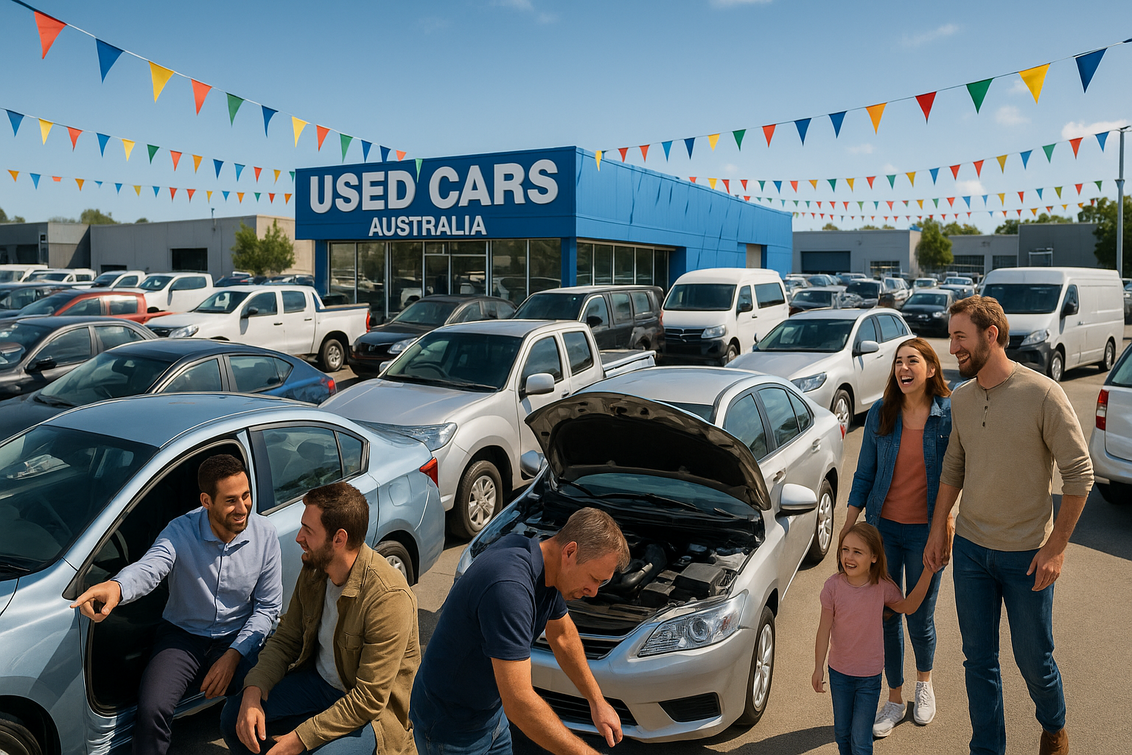
Used Car Sales Near Me
Estimated reading time: 12 minutes
Key takeaways
- Start with your needs and total budget, not a badge or hype.
- Search locally and across nearby suburbs; include dealers, private sellers, and auctions.
- Inspect methodically and take a purposeful test drive; consider a pre‑purchase inspection.
- Verify VIN, rego, finance status, and seller identity before paying anything.
- Negotiate on facts and be ready to walk away; there’s always another car.
- Work vehicles need payload, towing and compliance checks specific to your use.
Table of contents
- Used Car Sales Near Me
- Key takeaways
- What “used car sales near me” really means today
- Start with your needs, not the badge
- Where to buy: options, pros and cons
- Smart budget: the full cost of owning
- Shortlist like a pro
- What to check before you inspect in person
- Inspection checklist (simple and effective)
- Test drive: a route that reveals the truth
- Vital checks before you pay
- Dealer purchase basics
- Private sale basics
- Negotiation that works
- Special notes for utes, vans, trucks and minibuses
- Common red flags and how to avoid them
- Finance and insurance: keep it simple
- Trade‑in: make the most of your current car
- How to compare two similar cars
- Delivery day checklist
- FAQs
- Useful official and consumer guidance
- Conclusion
- Call to Action
- Important Disclaimer
What “used car sales near me” really means today
Looking for “used car sales near me” and not sure where to start? This guide walks you through how to find a good second‑hand car, ute, van, truck, or minibus in your area, what to check, and how to buy with confidence.
Whether you’re shopping for work or family, buying used is about matching the right vehicle to your needs, budget and risk comfort. Below, you’ll find simple steps, checklists, and pro tips you can use on the lot, on a test drive, and when you’re ready to finalise a deal.
Years ago, you had to visit lots in your suburb. Today, “near me” is a mix of:
- Licensed dealerships in your city or region
- Online listings from local sellers and dealers buying online guide
- National dealer groups that deliver to your door national used car buying guide
- Public auctions and fleet sales
Local is still useful. You can test drive quickly, return for after‑sales support, and deal with people who know local conditions. But don’t limit your search to one postcode. Cast a wider net across nearby suburbs to compare more vehicles and prices.
Start with your needs, not the badge
Before you look at any listings, write down what you need the vehicle to do. This helps narrow your shortlist fast.
- Purpose: daily commuting, family trips, tradie work, towing, rideshare, delivery, or school run
- Body type: hatch, sedan, SUV, ute, van, people mover, light truck, minibus
- Size: small for the city, medium for mixed use, or large for loads and towing
- Seating: five vs seven/eight seats
- Cargo: boot space, sliding doors, roof racks, bed length for utes
- Fuel: petrol, diesel, hybrid; availability and cost in your area
- Driving mix: city vs highway; sealed vs gravel
- Ownership plan: keep for 2–3 years, or long‑term
If you’re shopping work vehicles, think about payload, towing needs, and any specialised fit‑out. Always check the vehicle’s plated limits before deciding on a setup.
Where to buy: options, pros and cons
- Licensed dealers
- Pros: Choice, safety checks, consumer protections may apply, trade‑ins, finance options
- Cons: Prices can be higher than private sales
- Private sellers Facebook Marketplace buying guide
- Pros: Often cheaper, direct history from the owner
- Cons: No dealer warranty, you must do all checks yourself
- Auctions and fleet disposals
- Pros: Good for budget or ex‑fleet vehicles
- Cons: Limited test time, sold as‑is, buyer fees
If you value peace of mind, a reputable dealer is often the simplest path. For a broader overview, see this Australia‑wide used car guide. If you’re very confident with inspections and checks, private can work well.
Smart budget: the full cost of owning
Set a clear top budget before you browse. Include:
- Purchase price
- Transfer and registration costs
- Compulsory third party insurance (CTP) and any comprehensive insurance
- Stamp duty and fees (varies by state/territory)
- Servicing and repairs (plan a first service right after purchase)
- Tyres, battery, fluids, and filters
- Accessories or fit‑out (tints, towbar, racks, trays, bins)
- Fuel (estimate your weekly driving)
Tip: Keep a buffer for surprises. Even well‑kept used vehicles can need minor fixes early on. Important things to know when buying used.
Shortlist like a pro
Use your needs list to narrow down to 3–5 realistic options. Examples:
- Families: medium SUV or people mover with ISOFIX, good ANCAP safety, and easy‑clean trims
- Tradies: single‑cab or dual‑cab ute with the right GVM payload, or a mid‑size van with sliding doors and cargo protection
- Small business: compact van for city deliveries with low running costs
- Towing: diesel SUV or ute with the rated towing capacity and a strong cooling package
- People transport: used minibus with verified seating compliance and maintenance history
Consider our stock categories to get ideas: used trucks for sale, used utes, used vans.
What to check before you inspect in person
- Photos: look for consistent panel gaps, even paint, clean engine bay, no heavy wear
- Service history: full logbook stamps are a big plus
- Ownership: one or two long‑term owners is often better than many short stints
- Odometer: average use is about 10,000–15,000 km per year; judge in context
- Recalls: check if recalls have been completed
- Features: make sure the trim level matches the ad (safety tech, infotainment, towbar)
Inspection checklist (simple and effective)
Take your time. Do not inspect in heavy rain or at night if you can avoid it.
Outside:
- Check for overspray, wavy reflections, mismatched panels
- Look at tyres for even wear; uneven wear can hint at alignment or suspension issues
- Look underneath for leaks, rust, or fresh underbody coating hiding repairs
- Test all lights, indicators, and wipers
- On utes: check tray condition, mounting points, and any rust under the liner
- On vans: inspect cargo area for damage, water leaks, and door rollers
Inside:
- Seats, belts, and child seat points
- All switches, windows, locks, mirrors, air‑con, and infotainment
- No warning lights staying on after start
- Musty smells can hint at water leaks
Engine bay (cool engine for a cold start):
- Fluids at correct levels and clean
- No obvious leaks or burnt smells
- Belts and hoses in good condition
Paperwork:
- Service logbook with dates/km that make sense
- Two working keys
- Owner’s manual
- Any major repair receipts
Bring or request a pre‑purchase inspection if you’re not confident. A small cost now can save you later. You can also ask the seller to attend a workshop you choose. For an at‑a‑glance list you can carry, save this: vehicle inspection checklist.
Helpful background: consumer buying checklists from motoring publications reinforce the value of a careful inspection and a proper test drive to pick up fault patterns and past damage signs. See the used‑car checklists at CarsGuide for a practical overview, and our CarsGuide comparison guide.
Test drive: a route that reveals the truth
Ask for at least 20–30 minutes. Drive:
- From a cold start (listen for rattles, rough idle, smoke)
- In traffic (stop‑start smoothness, gearbox feel)
- On a smooth 80–100 km/h road (vibration, alignment, cruise control)
- Over bumps (suspension noises)
- At full lock in a car park (CV joints clicking?)
- With a firm brake stop (straight pull, no ABS fault)
Check:
- Straight tracking, no steering shimmy
- Smooth shifts (auto and manual)
- Responsive throttle and no hesitation
- Air‑con performance
- Parking sensors/camera clarity
- No burning smells after the drive
If towing matters, ask about tow history and look for a neat, properly wired towbar. Inspect chassis and mounting points.
Vital checks before you pay
When buying in NSW, official government guidance explains how to protect yourself: confirm the vehicle is not stolen or under finance, match the VIN and registration details, and understand the transfer rules and your responsibilities; it also points to steps for checking history and ownership details. See the NSW Government’s guide to buying a used vehicle. You can also explore regional notes for used cars in Sydney and our Newcastle guide.
In simple terms, you should:
- Verify the VIN/chassis number on the car matches the papers
- Check registration status and expiry
- Run a vehicle history check (e.g., to identify if there is money owing)
- Confirm the seller’s ID matches the name on the paperwork
- Read any statutory warranty or guarantee details if buying from a licensed dealer (varies by state/territory)
- Clarify what transfer forms or roadworthy checks are needed in your state
If anything seems off, pause and get advice before paying a deposit.
Dealer purchase basics
From a licensed dealership you can expect:
- Clear documentation and receipts
- A title guarantee (you should not inherit someone else’s debt)
- Roadworthy testing and checks before delivery (varies by state)
- Options for extended coverage and finance (compare offers)
Some dealer vehicles may come with statutory warranty or cooling‑off periods, depending on your state/territory, and the age/kilometres of the vehicle. Ask the dealer to explain what applies to your purchase and confirm in writing. If relevant to you, see our car sales Victoria guide.
Private sale basics
Do more of the lifting yourself:
- Meet at the seller’s home, sight ID, and check that the name matches the registration
- Ask for the service history and any major repair invoices
- Bring a friend or a mobile inspector if unsure
- Never transfer the full amount until documents are verified
- Be polite but firm if anything doesn’t add up
Negotiation that works
- Know the market: bring 2–3 comparable listings market comparison tips
- Focus on facts: tyres near end of life, brake wear, overdue service, minor dents
- Be fair: suggest a number with reasons, then pause
- Be ready to walk away: there will always be another car
- If the price is firm, ask for value‑adds (fresh service, full tank, new mats, rego)
Special notes for utes, vans, trucks and minibuses
Utes:
- Check tub/tray wear, under‑tray rust, wiring, and canopy seals
- Confirm payload on the compliance plate is enough for your work
- If lifted or modified, ask for engineering paperwork
Vans:
- Listen for sliding door rattles; check door rollers
- Inspect cargo area lining, bulkhead, and tie‑downs
- For couriers, look for frugal engines and service intervals that suit your workload
Light trucks and minibuses:
- Check seating compliance, belts, and loads
- Review service history closely; look for regular scheduled maintenance
- Understand GVM and any licence needs for your state
If you’re comparing options for work, our team can suggest practical models and fit‑outs that match your payload and space needs. Explore ideas here: used trucks for sale, used vans, used utes.
Common red flags and how to avoid them
- No service history, or stories that change
- Fresh paint on one panel only, or uneven gaps
- Odometer that doesn’t match wear on steering wheel/pedals
- Wet carpets or fogging inside windows (leaks)
- Seller rushes you or refuses inspection
- Unusual payment requests or third‑party “escrow” schemes
If your gut feels off, walk away.
Finance and insurance: keep it simple
- Get pre‑approval so you know your budget
- Compare rates and fees, not just the monthly payment
- Understand balloon payments if offered
- Choose loan terms that match your ownership plan
- Arrange comprehensive insurance to start at hand‑over
Ask our team about flexible choices that suit your budget and work cycle: finance options.
Trade‑in: make the most of your current car
- Clean inside and out; remove personal items
- Fix easy wins (bulbs, wiper blades, basic detailing)
- Bring spare keys, manuals, and service receipts
- Know your car’s strengths and any recent work
- Get a clear, written offer and timing
We can appraise on the spot or online. Start the process here: trade‑in valuation.
How to compare two similar cars
Pick a simple scoring sheet (out of 10 each):
- Service history completeness
- Tyres and brakes condition
- Interior wear and smells
- Paint/panel condition
- Test drive smoothness
- Features you’ll actually use
- Total drive‑away cost
Add up the scores and sleep on it. A short pause can save you from buyer’s remorse.
Delivery day checklist
- Confirm the VIN and rego match your paperwork
- Check all promised items are present (spare key, mats, accessories)
- Pair your phone and test all features
- Photograph the odometer at hand‑over
- Keep copies of the contract, invoices, and any warranty booklet
- Plan a baseline service if due soon
Useful official and consumer guidance
If you want a deeper dive into buyer steps, official NSW guidance explains checks for ownership, registration, and transfers, and how to avoid common risks: NSW Government buyer guide.
Consumer‑friendly checklists can also help you plan your inspection and test drive so you don’t miss key items: CarsGuide buyer checklists.
Conclusion
Finding “used car sales near me” is about more than distance. It’s about smart choices, clear checks, and a vehicle that fits your life or business. Use the steps above to shortlist, inspect, test, and buy with confidence. If you’d like a hand, we’re here to make it easy.
Call to Action
Ready to find the right vehicle? Explore our range of quality used cars, utes, vans, trucks and minibuses, book a test drive, or ask us for a trade‑in valuation today. Our team can walk you through finance options, inspections, and delivery so you can drive away with confidence.
Important Disclaimer
This article is general information only. It is not financial, legal, or mechanical advice. Always verify details yourself, including registration status, vehicle history, PPSR/finance checks, roadworthy requirements, statutory warranty or cooling‑off rules in your state, and the vehicle’s towing and payload limits. Consult a licensed mechanic, finance professional, or your relevant state authority before you buy.
FAQs
Is it safer to buy from a dealer or a private seller?
Both can be good. Dealers offer more structure and may include protections; private sales can be cheaper but need more checks from you. Pick the path that matches your comfort and time.
How many kilometres is “too many” for a used car?
It depends on the model, how it was driven, and maintenance. A well‑serviced car with higher kilometres can be better than a low‑kilometre car with poor history.
Do I need to get a pre‑purchase inspection?
It’s highly recommended, especially for private sales. A qualified mechanic can spot issues you might miss.
What’s the best time to negotiate?
After your inspection and test drive, and once you have market comparisons. Be polite, factual, and ready to walk away.
How can I check if a car still has money owing or has been written off?
Use official checks and verify against the vehicle’s VIN and registration details. In NSW, follow the steps in the NSW Government buyer guide.