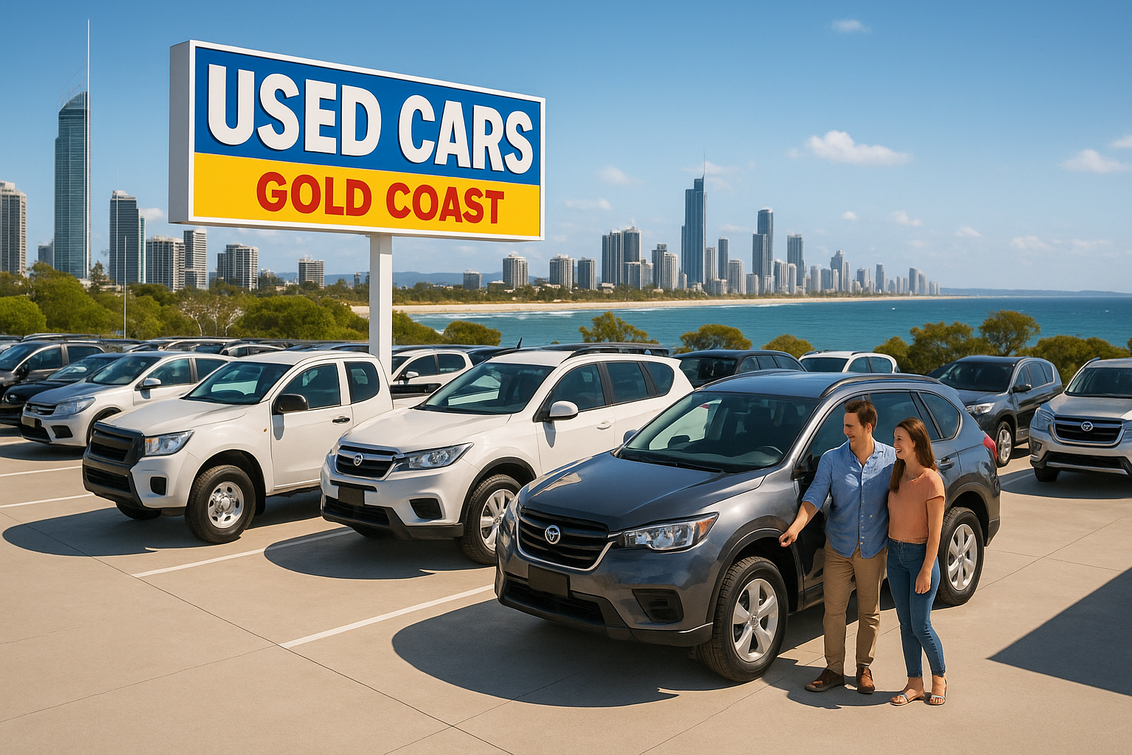
Used Car Sales Gold Coast
Estimated reading time: 12 minutes
Key takeaways
- Set a total budget that includes on-road costs, insurance, servicing, tyres, and finance.
- Shortlist reliable models and verify history with a VIN check and service records.
- Always arrange an independent pre‑purchase inspection before paying.
- Choose where to buy based on risk tolerance: dealers offer more protections; private sales can be cheaper.
- Negotiate using comparable listings and the inspection report; complete all paperwork carefully.
- Know your ACL rights for dealer purchases and the limited protections for private sales.
Table of contents
- Used Car Sales Gold Coast
- Why buy used on the Gold Coast?
- Step 1: Set your budget and research models
- Step 2: Choose where to buy
- Step 3: Verify and inspect the vehicle
- Step 4: Negotiate and complete the purchase
- Buyer rights under Australian Consumer Law
- Matching the car to your Gold Coast life
- Ownership costs to plan for
- Common traps to avoid
- How GoCarzSales helps Gold Coast buyers
- Quick vehicle inspection checklist
- Conclusion
- Call to Action
- Important Disclaimer
- FAQs
Why buy used on the Gold Coast?
Looking for used car sales on the Gold Coast? This guide shows you how to buy a reliable second-hand car, ute, van or SUV with confidence. We cover budgeting, where to buy, inspections, paperwork, and your rights, so you can shop smart and avoid costly mistakes.
Buying used can save you thousands, especially if you focus on proven models like the Toyota Corolla, Toyota Camry, Mazda 3, Mazda CX-5, and Ford Ranger, which are known in Australia for durability, fuel efficiency, and strong resale value. A clear process—budgeting, research, verification, inspection, then purchase—reduces the risk of hidden issues that are more common with used vehicles than new ones.
- You get more car for your money, with plenty of choice in popular, reliable models.
- You can pick a vehicle that suits Coast life—city driving during the week, beach trips on weekends, and towing or carrying gear when needed.
- Buying from a licensed dealer adds legal protections, simpler paperwork, and trade-in options.
Still, used cars can hide faults. That’s why careful checks, an independent inspection, and the right paperwork are essential.
Step 1: Set your budget and research models
A smart budget looks beyond the sticker price. Include:
- Purchase price and on-road costs
- Fuel and insurance
- Regular servicing, repairs, and tyres
- Finance costs (if needed)
- Any trade-in value you’ll use
Shortlist three to five models that match your needs and have a good reliability record. Brands like Toyota, Mazda, Nissan, Honda (used Honda buying guide), and Ford are often recommended for low maintenance and longevity. For everyday value and dependability, the Toyota Corolla, Toyota Camry, Mazda 3, Mazda CX-5, and Ford Ranger are strong picks in Australia.
Research is easier when you use filters. Search by make, model, year, price, kilometres, and location on Carsales (Carsales buying guide), Gumtree, Drive, or Facebook Marketplace (Facebook Marketplace used car guide). Read listings carefully, compare similar cars, and note service history, features, and any recent work.
Tip: Write a shortlist with three columns—“Must-have”, “Nice-to-have”, and “Deal-breakers”. Stick to it when you inspect and negotiate.
Step 2: Choose where to buy
Each buying option has pros and cons. Pick the path that suits your risk tolerance and budget.
- Licensed dealers
Pros: Australian Consumer Law (ACL) protections, statutory warranties in many cases, no finance owing guarantee, trade-ins, test drives, and help with paperwork.
Cons: Prices are often higher than private sales. - Private sellers
Pros: Lower prices and potential bargains via classifieds or auctions (including Manheim and Pickles).
Cons: Fewer protections and a higher risk of undisclosed faults—so inspections are critical. - Online marketplaces (Carsales, Gumtree, Facebook Marketplace, Drive) — see the used cars near me guide
Pros: Wide selection, filters, and sometimes seller reviews.
Cons: Verify the seller’s identity. Meet in public and stay safe. - Auctions
Pros: Potential deals.
Cons: Higher risk and usually no warranty.
Under the ACL, cars sold by dealers must be of acceptable quality, fit for purpose, and match the description; if a major fault emerges, you may be entitled to a repair, replacement, or refund. Private sales have minimal coverage, so due diligence is key.
Step 3: Verify and inspect the vehicle
Follow this checklist before you put money down. It’s your best defence against hidden issues.
- Request a VIN/chassis check
- Make sure the VIN matches the rego and paperwork.
- Run a vehicle history report to check for accidents, theft, finance owing, write-offs, and odometer tampering.
- Confirm service history
- Ask for stamped logbooks and receipts for regular maintenance. A solid history suggests better care and fewer surprises.
- Do a daylight walk-around and test drive
- Inspect paint, panel gaps, dents, rust, tyres, lights, glass, and the interior.
- Check all features: air con, infotainment, windows, locks, indicators, and safety systems.
- On the drive, test cold start, idle, braking, acceleration, steering, suspension, and transmission shifts.
- Get an independent pre‑purchase inspection — see this cars guide to buying used
- A qualified mechanic can uncover hidden faults. Services like RACV vehicle inspections are examples of what to look for.
- This step is essential—don’t skip it.
- Ask key questions
- Has it been in any accidents?
- How many owners?
- Real-world fuel use?
- What safety features does it have?
- Is the rego current? Are there any known issues?
- Stay safe with private sellers
- Get recent photos and a current odometer reading.
- Meet in a public place, preferably in daylight.
- If something feels off, walk away.
Step 4: Negotiate and complete the purchase
- Use your research and the inspection report
- Compare similar listings and use any faults or upcoming maintenance to justify your offer.
- A helpful tip is to keep a “detached” mindset—act like you’re buying for someone else so emotions don’t take over.
- Handle payment securely
- Avoid large cash amounts and wire transfers.
- Use secure payment and confirm there is no finance owing before you pay.
- Paperwork checklist
- Full names and addresses of buyer and seller
- Date of birth for both
- VIN, engine number, and registration (licence plate)
- Sale price, sale date, and signatures
- Get the title (where applicable), service records, owner’s manual, and any warranty documents
Keep copies of everything. Make sure the vehicle details match the car in front of you.
Buyer rights under Australian Consumer Law
When you buy from a licensed dealer, your purchase is covered by consumer guarantees. The car must be of acceptable quality, fit for purpose, and as described. If a major problem appears, you may be entitled to a repair, replacement, or refund. With private sales, protections are limited—so rely on checks, inspections, and careful paperwork.
For state-specific rules and steps (including NSW), refer to the NSW Government’s guide to buying a used vehicle: NSW Government — Buying a used vehicle.
Matching the car to your Gold Coast life
Choose based on how you drive, not just what looks good.
- Daily commuting and city runs
Consider compact, efficient cars like Toyota Corolla and Mazda 3. They’re easy to park and economical. - Family and holiday trips
Medium SUVs like Mazda CX‑5 balance space, comfort, and fuel use. Check for safety features important to you. - Work and weekend projects
Utes like Ford Ranger offer load space and towing capability. Verify the exact payload and towing figures for the model you’re considering, and make sure they meet your needs. If you carry people or gear for work, a used van or minibus may suit. Consider barn doors, seat layout, and cargo flooring. - Coastal lifestyle
Look for corrosion signs under the car and in door jambs if it’s been used near the beach. Check tyre tread and age—salt and sun can speed up wear.
If you need a specific body type, we can help you compare options: used trucks for sale, used utes, used vans.
Ownership costs to plan for
Budgeting early prevents stress later.
- Fuel and insurance
- Registration and compulsory insurance
- Servicing and wear items (tyres, brakes)
- Unexpected repairs—an inspection lowers risk, but parts still wear over time
- Finance costs if you’re using a loan finance options
Tip: Keep a small reserve for the first service after you buy. It’s a good time to get fresh fluids and filters so you know where the car stands.
Common traps to avoid
- Skipping the history check and independent inspection (these are non‑negotiable).
- Buying without seeing the car in daylight.
- Paying before you verify there’s no finance owing.
- Ignoring incomplete or patchy service records.
- Rushing paperwork—missing details can cause headaches at transfer time.
How GoCarzSales helps Gold Coast buyers
As a licensed dealer, we aim to make used car buying simple and safe:
- Clear listings and on‑site test drives
- Trade‑in options to lower your changeover cost trade-in valuation
- Help with paperwork and transfer
- Independent inspections welcome before you buy
- Options across cars, utes, vans, trucks, and minibuses to suit work and family life
This fits the advice above: dealer purchases include ACL protections, and you get support with the process.
Quick vehicle inspection checklist
Use this when you view the car: vehicle inspection checklist — see this guide for practical tips.
- Outside: panels straight, even paint, no rust, no mismatched colours, good tyres (even wear), clean glass, working lights.
- Inside: seats, belts, air con, infotainment, all switches, warning lights off when running.
- Engine bay: no obvious leaks or burnt smells; fluid levels correct.
- Test drive: smooth start, no smoke, steady idle, straight tracking, stable braking, smooth gear changes, no clunks over bumps.
- Paperwork: VIN matches car and rego; service history present; history check clear; no finance owing.
Conclusion
Buying a used car on the Gold Coast is easier when you follow a plan. Set your budget, research reliable models, choose the right buying path, verify the vehicle, get an independent inspection, and complete correct paperwork. Stick to these steps and you’ll cut risk and find the right car, ute, van, or SUV for your life.
Call to Action
Ready to find a great used vehicle on the Coast? Explore our range, book a test drive, or ask us about a trade‑in valuation today. We’re here to help you compare options and buy with confidence.
Important Disclaimer
This article is general information only. It is not financial, legal, or mechanical advice. Always verify details yourself, including roadworthy status, ownership and encumbrance (e.g., PPSR), warranty coverage, and towing/payload limits for your specific vehicle. Get a professional pre‑purchase inspection and consult qualified advisors or your relevant state authority for current rules and processes.
FAQs
What’s a “good” kilometre reading for a used car?
There’s no single number. Condition and service history matter more. Always get a history check and a pre‑purchase inspection to understand wear and upcoming maintenance.
Is it safe to buy from a private seller?
Yes—if you do your checks. Verify the VIN, run a history report, confirm service records, meet in public, and get a mechanic’s inspection before paying. Avoid cash or wire transfers and confirm there’s no finance owing.
How do I know if money is still owing on the car?
Run a vehicle history check and ensure the report shows no finance owing before you transfer funds.
Are auctions a good idea for cheap cars?
They can be, but risk is higher and warranty is uncommon. Inspect carefully and know you may have limited recourse if problems appear later.
What documents do I need to finalise the sale?
You’ll need buyer and seller full names and addresses, dates of birth, VIN, engine number, registration (plate), the sale price, date, and signatures. Also get the title (if applicable), service records, owner’s manual, and any warranty documents.