John Hughes Used Cars
Estimated reading time: 12 minutes
Key takeaways
- Set a clear budget that includes total ownership costs.
- Always run a PPSR and VIN history check before paying.
- Book an independent pre‑purchase inspection and read the logbook.
- Match payload, towing and safety features to your real needs.
- Choose the buying channel (dealer/private/auction) that fits your risk tolerance.
- Negotiate with evidence and use secure, traceable payment.
Table of contents
- John Hughes Used Cars
- How to set your budget and plan your search
- The essential used‑car checklist (do these before you buy)
- Where to buy: dealer vs private sale vs auction
- Popular second‑hand picks that are easy to live with
- Budgeting: beyond the sticker price
- Work and family needs: utes, vans, trucks and people movers
- Fuel type and running costs
- Safety and helpful tech to look for
- Red flags: walk away if you find these
- Smart negotiation and payment
- Registration, transfers and state rules
- Example step‑by‑step plan for your next viewing
- FAQs about buying used cars in Australia
- Bringing it back to your “John Hughes used cars” search
- Conclusion
How to set your budget and plan your search
Looking for John Hughes used cars and want to make a smart choice? This guide will help you compare any dealer’s stock with confidence, and it applies just as well at GoCarzSales. We’ll walk through the key checks, how to set a budget, what to look for on a test drive, and the simple steps to protect your money.
Our aim is simple: help you choose a safe, good‑value used car, ute, van, truck or people mover that suits your life and work. We use trusted Australian guidance throughout, and we explain why each step matters so you can move from shortlist to test drive with clarity.
A clear budget makes the rest easy. Start by researching what similar vehicles are selling for by year, model and trim. Independent pricing guides can help you sense‑check asking prices and spot outliers. Next, look at the full cost of ownership. This includes rego, insurance, servicing, tyres, and fuel. Build in a small buffer for the first service and any fresh consumables.
Rules and paperwork can vary across states and territories, so always check what your local authority requires for transfers, inspections and fees. If you’re buying interstate, confirm what you need at both ends before you commit.
Tip: Make a short, focused wishlist.
- Seating and cargo needs (kids, tools, wheelchair, pram, pets)
- Fuel type (petrol, diesel, hybrid)
- Transmission (auto/manual)
- Towing or payload targets
- Safety features you value
- Budget ceiling
This keeps you on track when you’re comparing cars at any dealer, including bigger yards like John Hughes, or a local independent.
The essential used‑car checklist (do these before you buy)
Work through these steps for every vehicle you’re serious about:
-
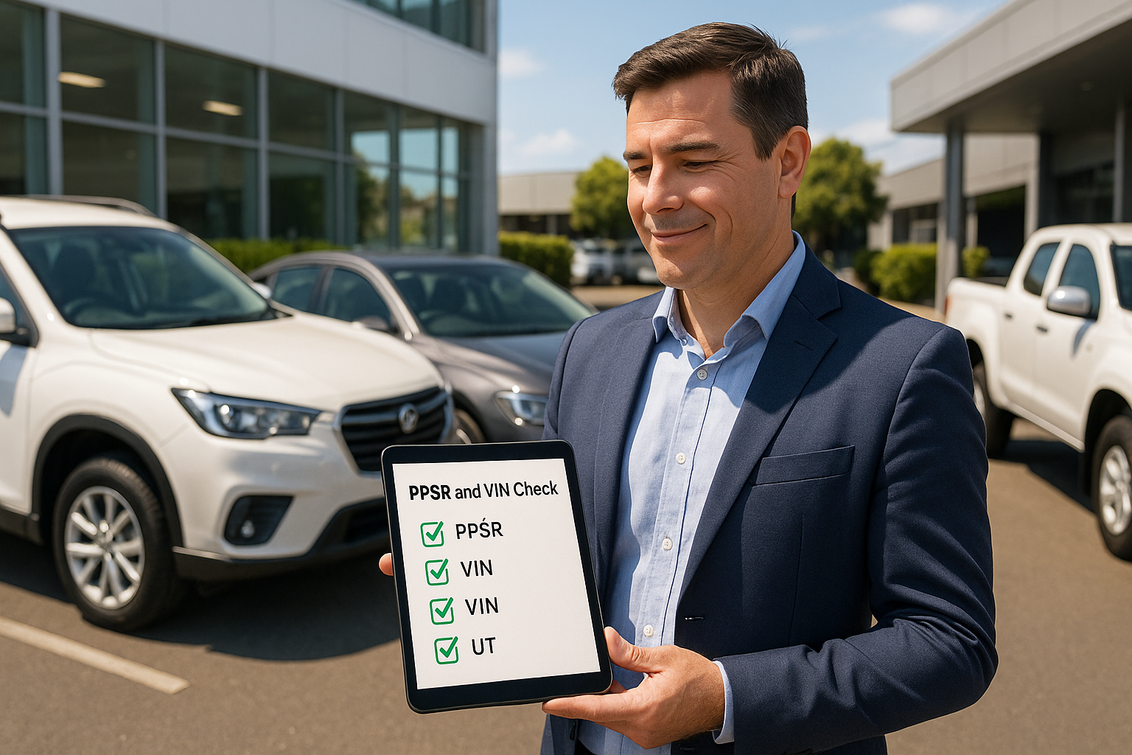
Run a PPSR check
Do a PPSR (Personal Property Securities Register) check before you hand over a cent. It costs about $2 and confirms if the car is free of finance, reported stolen, or written off. It’s fast, cheap, and protects you if the previous owner still owes money. -
Get a full history report using the VIN
A history report (using the VIN) can show key past events and data, such as previous sales, safety ratings, finance owing, and odometer details. This helps you spot tampering and gives a clearer picture of how the car was treated across states and territories. -
Book a pre‑purchase inspection
Use a qualified inspector or trusted mechanic to assess the car’s mechanical condition before you buy. A proper inspection can save you thousands by finding hidden faults or wear. If the seller resists a third‑party inspection, consider it a red flag. -
Check the logbook and service history
Read the service logbook. Look for regular services at the right intervals, timing belt/chain changes when due, and any major repairs. Gaps or vague entries can mean extra risk and cost. -
Do a thorough test drive
Drive at urban speeds and on a highway. Listen for knocks, rattles, or whining. Check:- Cold start behaviour and idle quality
- Smooth gear shifts and clutch take‑up
- Straight tracking and brake feel
- Air‑con performance and all electrics
- Tyre wear pattern (even wear is good)
- Visibility, seating comfort, child‑seat anchor points
-
Confirm the paperwork and ID
Match the VIN on the car, on the compliance plate, in the logbook, and on the PPSR and history report. Confirm any factory recalls have been done. Ask for all keys, manuals, accessories and any receipts for recent work. -
Agree on any fixes in writing
If the seller agrees to fix items, put the details in writing with clear dates. If it’s a dealer warranty, read what’s covered and for how long. Keep copies of everything.
Where to buy: dealer vs private sale vs auction
You can buy from a licensed dealer, a private seller, or via auction. Each has its pros and cons depending on your budget, risk tolerance and timing.
- Licensed dealer
Often offers statutory warranties where applicable, consumer protections, and trade‑in options. You may pay a little more, but you get convenience, choice and formal paperwork. - Private sale
Can be cheaper. But you must handle all checks yourself and you’ll have fewer protections. Great if you’re experienced and patient. - Auction
Access to a lot of cars fast. Inspections can be limited and cars are usually sold “as is”. Good for trade buyers who know exactly what they’re looking at.
Whichever route you choose, the PPSR, history report, inspection, and logbook checks still apply.
Popular second‑hand picks that are easy to live with
If you’re shortlisting everyday runabouts, small sedans and hatches, or family SUVs, these models are known for strong value and easy ownership:
- Toyota Corolla — economical, practical, and well regarded for safety features
- Mazda 3 — stylish cabin with good space and decent driving dynamics
- Honda CR‑V — a solid, affordable family SUV choice
- Toyota Prado — seven seats and strong resale for larger families or touring
Always compare individual cars on condition, service history, and total cost to you. The right example of a less common model can still be a great buy.
Budgeting: beyond the sticker price
Plan for:
- Purchase price (be clear on your walk‑away limit)
- Stamp duty, rego transfer and plate fees (check your state)
- Insurance (get sample quotes using the VIN)
- Scheduled servicing and wear items (tyres, brakes, battery)
- Any immediate fixes from your inspection
- Fuel costs suited to your driving (city vs highway, towing)
If you’re exploring lending, understand the full repayment amount and fees. Keep a buffer for surprises. If you’re comparing dealers, check whether they offer flexible finance options and how it affects the total you’ll pay.
Work and family needs: utes, vans, trucks and people movers
If you’re eyeing a ute, van, mini‑bus or truck, focus on the job it must do, then match the vehicle to the task:
- Payload and GVM
Confirm that the payload suits your real‑world load. Look at the compliance plate and manual. When in doubt, over‑spec rather than under‑spec. If you need more headroom, search our used vans. - Towing
Check the rated braked towing capacity, towbar rating, and towball download limit. Make sure the engine, transmission and cooling setup can cope with your trailer or caravan, especially in hot Aussie summers. If heavy towing is regular, consider a diesel. - Cabin and storage
For tradies, look for lockable storage, ladder racks, 12V outlets, and easy‑clean trims. For families, focus on ISOFIX points, sliding doors for easy access, and flexible seating. If you need an all‑rounder for work and weekends, see our used utes. - Test fit your gear
Bring your pram, tools or sample cargo to a viewing. Check access heights, tie‑downs and loading angles. For larger fleets or specialist bodies, explore our range of used trucks for sale.
Fuel type and running costs
- Petrol
Usually cheaper to buy and quieter around town. Great for short trips and low annual kilometres. - Diesel
More torque for towing and loads. Often better fuel economy on long runs. Needs proper servicing and quality fuel. Short, cold trips can be harder on diesels. - Hybrid
Lower fuel use in stop‑start traffic. Check battery health and service records. A test drive in your typical routes is essential.
Pick what suits your driving pattern and total ownership costs, not just the cheapest bowser price.
Safety and helpful tech to look for
Aim for features that lower stress and protect your family:
- Good braking and steering feel on the test drive
- Airbags and active safety tech (like AEB and blind‑spot monitoring, where fitted)
- Child‑seat anchor points that are easy to access
- Clear, simple infotainment with Bluetooth for hands‑free calls
- Headlights that give you strong night visibility
- A history report may include safety ratings to help you compare choices
If a feature is essential (for example, Apple CarPlay or a reversing camera), confirm it’s installed and working in the exact car you’re buying. Trims vary.
Red flags: walk away if you find these
- PPSR shows finance owing, written‑off or stolen status
- VINs don’t match across the car, paperwork and PPSR
- Fresh paint on one panel with misaligned gaps
- Oil or coolant leaks, burning smells, or warning lights
- Uneven tyre wear and vibrations at highway speeds
- A seller who refuses a pre‑purchase inspection
- A logbook with big gaps or inconsistent entries
It’s better to miss out than inherit a headache.
Smart negotiation and payment
- Use your research to anchor your offer. Show comparable prices and inspection findings. Be fair but firm.
- Separate the trade‑in
Get your trade‑in valued independently so you know where you stand. Ask us for a quick trade‑in valuation. - Be clear on “drive‑away”
Confirm what’s included in the final number: rego, transfer fees, stamp duty, and any accessories. - Use secure payment
Avoid carrying cash. Use traceable, secure payment methods. Only pay once the PPSR check is clear and you have a signed contract.
Registration, transfers and state rules
Every state and territory has its own process and timelines for transfers, safety inspections and fees, so check the specific requirements where you live. If you’re buying interstate, verify what you need to do to get the car on the road at home before you commit. Keep copies of all IDs and receipts.
Example step‑by‑step plan for your next viewing
- Shortlist two or three cars that fit your needs and budget.
- Call ahead. Ask for the VIN, service history details, and any known issues.
- Order a PPSR check and a VIN‑based history report.
- Inspect in daylight on a dry day. Test all electrics and do a long test drive.
- Book a pre‑purchase inspection if the car still looks good.
- Re‑do your sums, including on‑road costs and insurance.
- Negotiate, confirm fixes in writing, and pay via a secure method.
- Complete rego transfer and keep copies of everything.
Bringing it back to your “John Hughes used cars” search
Searching for “John Hughes used cars” is a smart way to see a lot of vehicles fast. Use this checklist to compare any car, at any yard, on equal terms. Do your PPSR and VIN checks, book a pre‑purchase inspection, read the logbook, and compare models that suit your lifestyle and budget. If you’re weighing up a ute or van for work, match the payload and towing needs to the right platform, then test fit your gear. If family safety is top priority, look for strong service history and the safety features you value.
Conclusion
Buying a used car in Australia is straightforward when you follow a clear plan. Set a budget with a little buffer, verify the car’s background with PPSR and a history report, and always get an independent inspection. Whether you shop at a large dealer network or a local yard, the same checks protect your money and help you drive away happy.
Ready to compare options now? Explore GoCarzSales stock across cars, SUVs, used utes, used vans, minibuses and trucks. Book a test drive, ask about finance options, or request a quick trade‑in valuation to get started today.
FAQs about buying used cars in Australia
Is a PPSR check really worth it?
Yes. It’s an official check (about $2) that tells you if the car is under finance, stolen or written off, and it can save you from major loss.
Can I get a full history with just the rego?
Use the VIN for the most complete history data. A history report can include previous sales, safety ratings, finance owing and odometer information across all states and territories.
Do I need a mechanic’s inspection if I’m buying from a dealer?
A pre‑purchase inspection is wise for any used car. It helps reveal issues you might miss and supports your negotiation.
I’m shopping for my first car. Any good, safe bets?
Popular options include the Toyota Corolla, Mazda 3, Honda CR‑V, and Toyota Prado for larger families. Still compare individual examples on condition, history, and total cost to you.
What’s better: dealer, private or auction?
Each has trade‑offs. Dealers offer more protections and convenience, private sales can be cheaper with more buyer responsibility, and auctions are high‑volume and usually “as is”.