Carsales
Estimated reading time: 12 minutes
Key takeaways
- Set a total ownership budget before you browse, including fuel, insurance and servicing.
- Shortlist reliable models and check fair value using market data and comparable listings.
- Decide dealer vs private: stronger protections and warranty vs lower upfront price.
- Always run a PPSR, test drive thoroughly and book an independent inspection.
- Use today’s softer market to negotiate with confidence and be ready to walk away.
Table of contents
- Carsales
- Carsales, online platforms, and how Aussies shop now
- Step 1: Set your budget and needs
- Step 2: Research models and market value
- Step 3: Where to buy — dealer, private seller, or online marketplace?
- Step 4: Pre-purchase checks and inspections
- Step 5: Financing and negotiation
- Key risks and legal protections
- Choosing a reliable used model (cars, utes, vans and more)
- Smart shopping on Carsales-style marketplaces
- Avoiding common pitfalls
- First-time buyer tips
- Practical scenarios and checklists
- Conclusion
- Important Disclaimer
- FAQs
Looking for a used vehicle on Carsales? This plain-English guide shows you how to shop smart for second-hand cars, vans, utes, minibuses and trucks in Australia, whether you’re buying via Carsales, other online platforms, a private seller, or a licensed dealer. We’ll cover budgeting, research, inspections, vehicle history checks, warranties, and negotiation, so you can buy with confidence.
Carsales, online platforms, and how Aussies shop now
Most buyers now start online. You’ll find huge choice on marketplace sites like Carsales, along with other platforms such as the review and listing site CarsGuide, the CarsGuide buying guide, Gumtree and Drive. These sites make it easy to filter by price, location, body type, transmission, fuel type and more.
Dealers also list their stock online, so you can compare dealer-backed vehicles (with warranty and legal protections) against cheaper private-sale cars (usually sold “as-is”).
Step 1: Set your budget and needs
Before you browse, set your budget and be honest about how you’ll use the vehicle. Plan for the full cost of ownership: purchase price, finance, insurance, registration, fuel, tyres, servicing and repairs. Think about how long you’ll keep it.
Match the car to your lifestyle:
- City commuter? Look for a small, fuel-efficient hatch — try this Hyundai i30 buying guide — or a sedan.
- Tradie or courier? A ute or van with the right payload and cargo space.
- Family? A safe, comfortable SUV or people-mover.
- Touring or off-road? A 4×4 with suitable clearance and towing capacity.
If you’re a first-time buyer, a low‑kilometre used car often offers better value than new, because someone else has worn the initial depreciation.
Step 2: Research models and market value
Shortlist three to five likely models, then dig into reliability and running costs. Independent owner reviews and expert guides are helpful. Use respected sources like RACQ, RedBook and CarsGuide to compare reliability ratings, common faults and fair pricing bands.
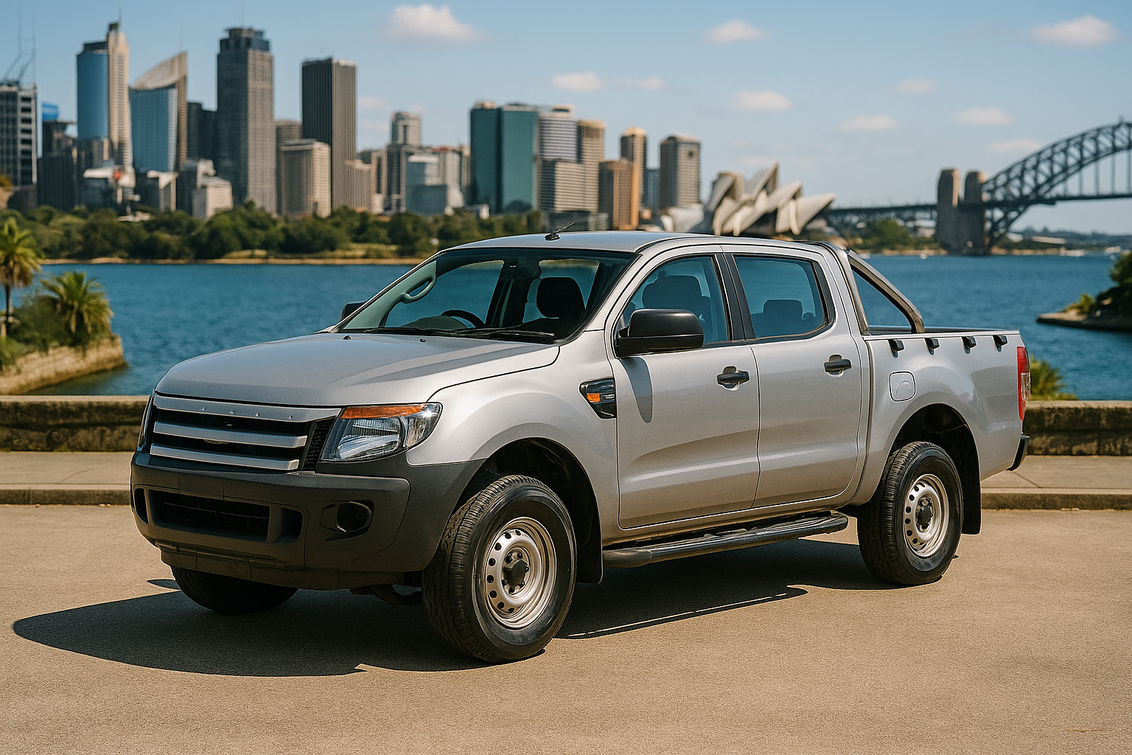
Popular, dependable choices for many Aussie buyers include Toyota Corolla, Mazda 3, Ford Ranger, plus a range of Nissan and Honda models. They’re known for durability, efficiency and reasonable maintenance costs.
To assess fair value, check market prices for make, model, year, trim, kilometres and condition using RedBook estimates and current listings on CarsGuide. This gives you a target price range before you message a seller or step onto a yard.
Pro tips:
- Favour complete service history and fewer owners.
- Cross-check recent timing belt/chain, transmission service, and common wear items.
- Compare the same spec (engine, trim, drivetrain) to avoid apples-to-oranges pricing.
Step 3: Where to buy — dealer, private seller, or online marketplace?
You can buy from:
- Licensed dealers: Expect cooling‑off periods (in some states), on-site finance, and legal protections. In Victoria, for example, licensed traders must provide a statutory warranty on many used cars (often 3 months/5,000 km for qualifying vehicles under 10 years old and under 160,000 km). Dealers may charge more, but you get stronger protections.
- Private sellers: Usually cheaper, but higher risk. Sales are generally “as‑is,” with no warranty, so your checks and inspections matter even more.
- Online platforms: Use sites like CarsGuide, Carsales, Gumtree and Drive to compare similar vehicles, gauge market value, and shortlist options near you.
If you want legal backup and a minimum safety net, buying from a licensed dealer can be safer—especially if you’re not mechanically savvy. If you’re experienced and happy to organise inspections yourself, a private sale could save you money.
Step 4: Pre-purchase checks and inspections
A careful check is non-negotiable. Do the following before you commit.
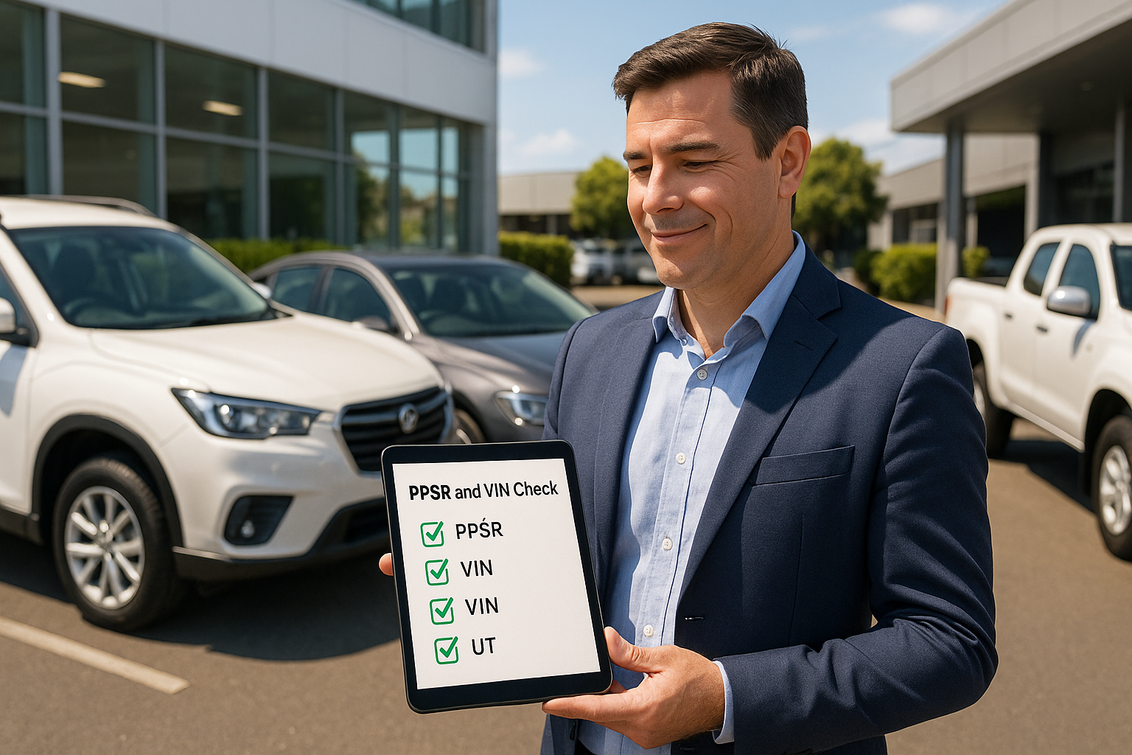
- PPSR (Personal Property Securities Register) check
Always run a PPSR check using the VIN or chassis number. It costs a few dollars and confirms if the vehicle is recorded as stolen, written-off, or has finance owing. This protects you from repossession or hidden history. - Test drive and visual inspection
Inspect in daylight. Check paint, panels and gaps for mismatched colours or repaired damage. Look over the interior, seats and controls. Inspect tyres (even wear), lights, wipers, and warning lights on start-up. Peek under the bonnet for leaks and uneven idling, and look underneath for rust or damage. Test drive at varied speeds and on different road surfaces if possible. - Independent mechanical inspection
For private sales, book an independent pre‑purchase inspection. Even with dealer cars, an external check can be worth it—especially on older or higher‑kilometre vehicles. Ask for a Roadworthy Certificate (RWC) where applicable and review the service logbook in detail. - History and paperwork
Confirm the recorded odometer, past ownership, accident history (if available), and registration expiry. Check any remaining warranty details and any cooling‑off terms. Keep copies of everything.
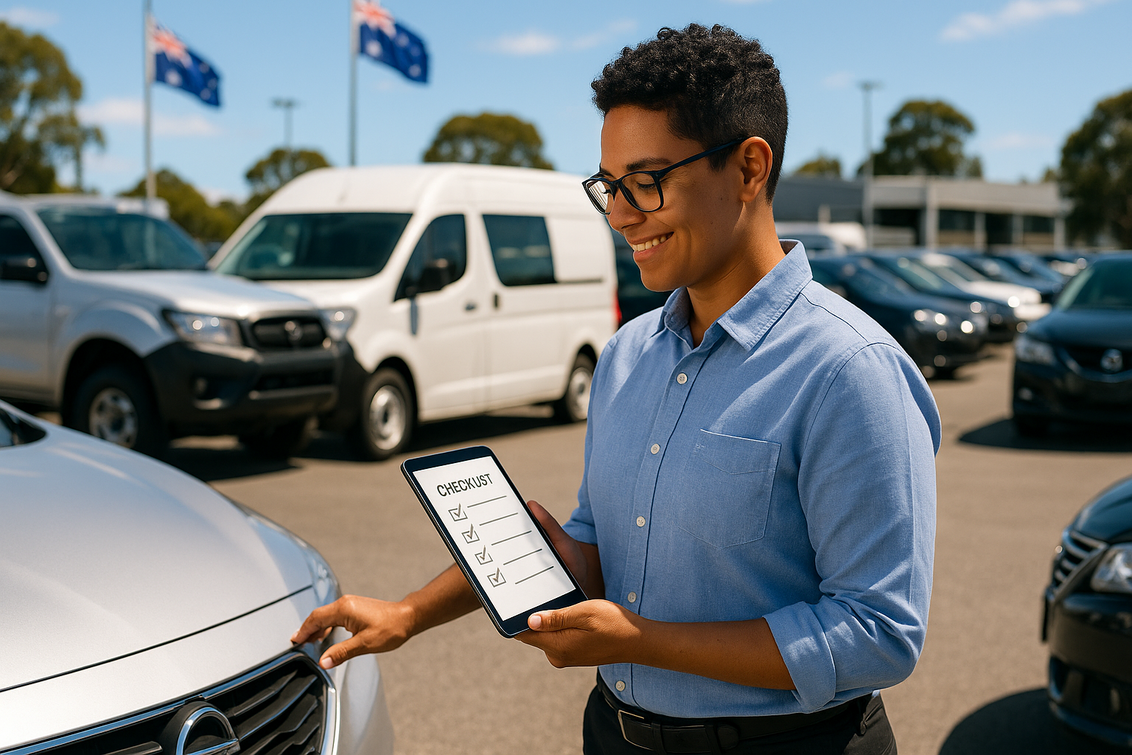
Complete buying checklist (tick these off):
- Run a PPSR search using the VIN.
- Test drive on different roads and speeds.
- Inspect interior, exterior, engine bay and underbody.
- Get an independent mechanical inspection.
- Review service history, RWC (where applicable) and registration status.
- Confirm dealer warranty/cooling‑off period (if buying from a licensed dealer).
- Ask the seller direct questions (reason for sale, issues, accidents, modifications).
- Negotiate using market data (RedBook estimates and current listings) and walk away if it doesn’t add up.
Tip: Bring a trusted friend or expert when you inspect and negotiate—an extra set of eyes helps spot red flags and keeps emotions in check. See our vehicle inspection checklist.
Step 5: Financing and negotiation
Finance
- Car loans can offer lower rates than general personal loans, but compare total costs, fees and flexibility.
- Consider how long you’ll keep the vehicle and your monthly budget before locking in a term. Explore your finance options.
Negotiation
- Use RedBook and active listings on CarsGuide to set your target price based on the exact model, year, trim and condition.
- Since the used market has cooled from the 2023 peak—particularly in NSW and Victoria—be confident bargaining. Private sales are typically cheaper than dealer prices, but you trade off warranty and legal protections.
- Bring a friend for support, and don’t be afraid to pause, think, or walk away.
If you have a current vehicle, a trade‑in can simplify changeover and reduce your loan size. Bring your service records and be realistic about condition to get a fair trade value. trade-in valuation
Key risks and legal protections
- Private sale risk: No statutory warranty and limited recourse if issues appear after purchase. You must rely on your own checks and an independent inspection.
- Dealer protection: Licensed dealers must follow Fair Trading laws and, in some states, provide cooling-off periods and statutory warranties on qualifying used cars.
- State-by-state rules: Protections vary—for example, rules in Victoria and NSW differ, and auctions or private sales may not include warranty. Always check your local state authority’s guidance before you buy.
- WA: The PPSR search can be accessed via official channels; always use the VIN to avoid errors.
Choosing a reliable used model (cars, utes, vans and more)
If you’re not sure where to start, add these proven performers to your shortlist:
- Toyota Corolla and Mazda 3 for dependable, efficient commuting.
- Ford Ranger and popular Nissan or Honda models for robust drivetrains and broad parts availability.
Think about your use case:
- Utes: Payload for tools, ladder racks or canopies, and 4×4 for worksites if needed. used utes
- Vans: Cargo volume, sliding doors, tie-down points and reversing aids. used vans
- Trucks and minibuses: Check seating configuration, GVM/GCM and licencing requirements. used trucks for sale
- SUVs and family cars: Rear-seat space, child-seat anchorage points, boot size and safety features.
Across all body types, service history, careful ownership and a clean PPSR are strong signs of a good buy.
Smart shopping on Carsales-style marketplaces
- Filter by tight price and kilometre ranges to cut noise.
- Prioritise listings with clear photos, service history, rego details and VIN for a PPSR check.
- Compare at least three similar vehicles to confirm fair value using RedBook estimates and CarsGuide listings.
- Be mindful of private versus dealer trade-offs: a cheaper price isn’t cheap if you inherit a hidden problem.
Avoiding common pitfalls
- Skipping the PPSR check: This can leave you exposed to stolen or encumbered vehicles. Always check the VIN.
- Not booking a pre‑purchase inspection: It’s the best money you’ll spend on a used car, especially in private sales.
- Ignoring state rules: Cooling‑off, warranty and RWC requirements vary. Check with your local authority and understand what your purchase includes.
- Rushing the deal: Prices have eased since the 2023 peak in some states—use this to your advantage and negotiate calmly.
First-time buyer tips
- Look for a low‑kilometre, well‑maintained used car rather than new to get more car for your budget.
- Shortlist easy-to-drive models with good visibility and safety features.
- Avoid complex modifications; stick with vehicles in original condition where possible.
- Bring a trusted friend or mechanic to the inspection and test drive.
Practical scenarios and checklists
1) Daily commuter
- Shortlist: Toyota Corolla, Mazda 3 or a similar small hatch/sedan — see the Hyundai i30 buying guide.
- Focus on low fuel use, easy parking, and up-to-date servicing.
- Use CarsGuide to compare running costs and owner feedback.
2) Tradie or delivery driver
- Shortlist: Diesel ute or mid-size van with suitable payload and cargo layout.
- Check service history for heavy use, suspension wear, and clutch condition.
- Verify VIN and run PPSR; book a pre-purchase inspection.
3) Family upgrade
- Shortlist: SUV — try this Mitsubishi Outlander guide — or a people-mover with a solid safety record.
- Check seat layout, child-seat points and boot space.
- Confirm any dealer warranty and cooling-off terms if buying from a trader.
4) Weekender and touring
- Shortlist: 4×4 ute or SUV — see the Subaru Forester guide — with the features you need.
- Inspect underbody, tyres and driveline carefully; look for signs of off-road abuse.
- Verify any accessories are compliant and insured; ask for receipts and RWC where applicable.
Conclusion
Buying used through Carsales or any marketplace is easier when you have a plan. Set your budget and needs, shortlist reliable models, check market value, and complete every step of the inspection and PPSR process. Choose between dealer protections and private-sale savings based on your risk comfort, and use today’s softer market to negotiate a fair price.
At GoCarzSales, we stock quality second-hand utes, vans, minibuses, trucks and passenger cars, all hand-picked for everyday reliability. Ready to take the next step? Explore our latest vehicles, book a test drive, or chat about finance and trade-ins today. used utes used vans used trucks for sale finance options trade-in valuation
Important Disclaimer
This article is general information only and is not financial, legal or mechanical advice. Always verify details yourself (including PPSR status, service history, registration, warranty, cooling‑off rights, RWC, and any towing or payload limits) and consult qualified professionals or your relevant state authority before buying.
FAQs
What is a PPSR check and why does it matter?
It’s a national register that shows if a vehicle is stolen, written-off or has finance owing. Run it using the VIN before you pay any deposit. It only costs a few dollars and can save you from major headaches.
Do I get a warranty with a used car?
Private sales are usually “as-is” with no warranty. Licensed dealers offer stronger protections under Fair Trading laws, and some states require statutory warranties on qualifying vehicles. In Victoria, for example, buyers may get a 3‑month/5,000 km warranty on certain used cars meeting age and kilometre limits when purchased from licensed traders.
Are used car prices dropping?
Yes, the market has cooled since the 2023 peak in several areas, including NSW and Victoria. Use this shift, plus RedBook estimates and active listings, to negotiate.
Should I buy from a private seller to save money?
Private sales can be cheaper, but you miss warranty and formal protections. If you go private, be extra thorough: run a PPSR, book a pre‑purchase inspection, confirm full service history and test drive carefully.
What paperwork should I ask for?
Ask for the service logbook, RWC (where applicable), registration details, proof of ownership, and any warranty or cooling-off paperwork if buying from a dealer.