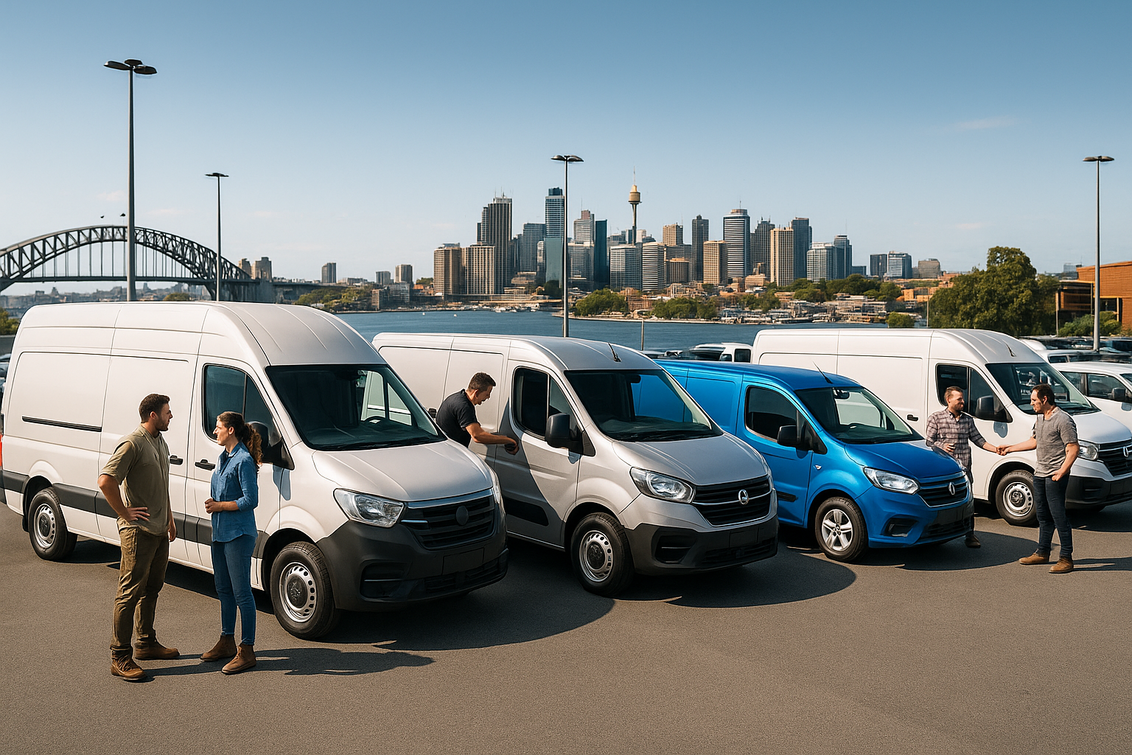
Used Vans Sydney
Estimated reading time: 12 minutes
Key takeaways
- Match van size, payload, and layout to your actual gear and routes.
- Inspect carefully: service history, DPF health, doors, suspension, and electrics.
- Total cost matters: rego, insurance, servicing, tyres, fuel, tolls, and accessories.
- SWB suits city parking; LWB/high-roof boosts capacity but watch height limits.
- Diesel is efficient for mixed routes; petrol or EV/hybrid can suit short city runs.
- Consider ex-fleet vans for records and value, but check wear items closely.
Table of contents
- Used Vans Sydney
- A quick look at short-term options: van hire vs buying
- Why buy a used van in Sydney?
- Which van suits your job?
- Key specs to compare
- Sydney driving realities
- What to check on a used van
- Common wear points on vans
- Kilometres vs condition
- Ex-fleet or ex-lease vans: pros and cons
- Petrol, diesel, hybrid, or electric?
- Size and layout: getting the cargo space right
- Safety first
- Total cost of ownership
- Paperwork and checks to protect your buy
- How to test drive like a pro
- Fit-outs for Sydney work
- Practical tips for Sydney life with a van
- How GoCarzSales can help
- Conclusion
- Important Disclaimer
- FAQs: Used vans in Sydney
A quick look at short-term options: van hire vs buying
Hunting for used vans in Sydney? This guide walks you through how to choose the right van, what to check, and how to budget well. Whether you’re a tradie, courier, small business, or family, buying smart can help you get a reliable van without paying new-vehicle prices.
In Sydney, used vans are popular because they’re practical. You can carry tools, stock, sports gear, or a work crew. But there’s a lot to consider: size, payload, fuel, safety tech, service history, and total cost of ownership. Below, we keep it simple and clear so you can buy with confidence.
You might still be weighing up whether to buy or hire. For short projects or one-off moves, a rental can make sense. One notable vehicle hire business is Go With The Gecko. Go With The Gecko is a self-drive vehicle hire company operating across Australia. They offer vans, utes, and trucks, and run bookings through their Book N Go mobile app. You can browse vehicles, choose a location, add your licence and card details, then unlock the vehicle and drive away using the app Go With The Gecko. The service uses a simple three-step model via the app: download, book, and unlock to drive away Book N Go app process.
Go With The Gecko lists 31 locations nationwide, including a strong presence in Sydney, Melbourne, Brisbane, the Gold Coast/Sunshine Coast, and single locations in Perth, Adelaide, and Canberra Gecko locations. Customer ratings on ProductReview show a 2.9 out of 5-star score based on 668 reviews. If you only need wheels for a day or two, hiring can be handy. If you need a van every week, buying a used van is often the better long-term play.
Why buy a used van in Sydney?
- Save money: Used vans usually cost far less than new. You can step up a size, fit-out, or brand without blowing your budget.
- Proven workhorses: Many vans are built for long service lives. A well-kept van with good records can be a smart buy.
- Ready to work: Cargo barriers, shelving, roof racks, and tow bars often come fitted, which saves time and cash.
- Choice and availability: Sydney’s used market is big, so you can compare many brands, sizes, and prices in one city.
Which van suits your job?
Start with what you carry, where you drive, and how often you load up. Then match a van type to your needs.
- City couriers and small trades:
- Short-wheelbase (SWB) mid-roof vans for tight streets and carparks.
- Examples often seen: Toyota HiAce, Hyundai iLoad/Staria Load, VW Transporter.
- Larger loads and bulky tools:
- Long-wheelbase (LWB) or high-roof vans for bigger payload and standing room.
- Examples often seen: Ford Transit, Mercedes-Benz Sprinter, VW Crafter.
- Mixed crew and cargo:
- Crew vans (second-row seats + cargo area) for team transport and tools.
- Check that payload still meets your needs once seats are added.
- People movers and minibuses:
- Great for community groups, schools, or airport runs.
- Look for lap–sash belts for all seats and working air-con across the cabin.
- Ute vs van:
- Utes are handy for rough sites and dirty loads, but vans keep gear dry and safe.
- A canopy can make a ute more van-like, but interior space will differ.
Key specs to compare
- Payload and GVM:
- Payload is how much weight you can carry in the van (people + cargo + accessories).
- GVM is the max the vehicle can weigh when loaded. Do not exceed it.
- Towing:
- If you tow, check the braked towing limit and towbar rating.
- Balance towball weight and rear axle loads.
- Roof height and wheelbase:
- High-roof vans are great for shelving and headroom but watch for low carparks.
- SWB is easier to park; LWB carries more.
- Drivetrain:
- Diesel is common for torque and economy; petrol can suit short city trips.
- Automatics are easier in traffic; manuals can be cheaper to buy.
- Safety and driver aids:
- Look for airbags, ABS, stability control, reversing camera, front/rear sensors, lane assist, and blind-spot tech.
- Cabin comfort:
- Seats, visibility, air-con, phone connectivity, and storage affect daily comfort.
- Doors and access:
- Dual sliding doors help curbside loading on narrow streets.
- Barn doors can be better than lift-up tailgates for low ceiling carparks.
Sydney driving realities
- Traffic and hills:
- Stop–start traffic can be hard on clutches and DPFs in diesel vans. Plan regular highway runs to help DPF health.
- Parking:
- Check height for CBD and shopping centre carparks. Know your clearance.
- Tolls and distances:
- Budget for toll roads if you cross town often. Keep an eye on fuel use and trip times.
- Loading zones:
- Learn local loading zone rules to avoid fines. Plan for quick, safe drop-offs.
What to check on a used van
A careful inspection can save thousands. Use this step-by-step list, and consider a pre-purchase inspection by a qualified mechanic.
- Paperwork and identity:
- VIN matches across the vehicle, logbook, and any bills.
- Service history with dates, km, and workshop details.
- Any recall work done; ask for proof where possible.
- Start-up and idle:
- Easy cold start. No warning lights. Smooth idle, no misfires or rattles.
- Engine and fluids:
- Oil level and colour; no sludge under the cap.
- Coolant is clean, correct colour, no oil traces.
- No leaks under the van after a few minutes.
- Diesel-specific:
- Look for DPF or EGR issues. Excessive smoke is a red flag.
- Ask about driving patterns (regular highway runs help DPF life).
- Transmission and clutch:
- Smooth shifts, no crunching. Clutch bite is not too high.
- Automatics shift without shudder or flare.
- Steering, suspension, and brakes:
- Tracks straight. No pulling under brakes.
- No clunks over bumps. Even brake feel, no vibration.
- Tyres and wheels:
- Even tread wear; uneven wear may mean alignment or suspension issues.
- Load-rated tyres suitable for the van’s GVM.
- Body and cargo area:
- Rust in sills, door bottoms, roof seams, and windscreen edges.
- Check under mats and in gutters. Surface rust may hide deeper issues.
- Cargo floor dents, tie-downs secure, bulkhead/cargo barrier firmly mounted.
- Doors and seals:
- Sliding doors roll easily; latches and locks work.
- Seals not torn; no water leaks.
- Electrics:
- All lights, indicators, horn, wipers, power windows, central locking, and HVAC work.
- Reverse camera and sensors function well.
- Interior and comfort:
- Seat frames and bolsters not broken.
- No damp smells suggesting leaks.
- Test drive:
- Drive at city and highway speeds.
- Check for vibrations, brake feel, and straight tracking.
Tip: Bring a second person. They can listen for noises while you focus on the road.
Common wear points on vans
- Sliding door rollers and cables can wear out; test them many times.
- Rear shocks and springs carry heavy loads; listen for knocks and look for sag.
- Clutches on couriers’ vans can be tired from stop–start work.
- Roof racks and ladder rollers can stress roof seams; inspect for cracks and rust.
- Air-con in people movers and minibuses must cool the rear rows; test on a hot day.
Kilometres vs condition
High kilometres are not always a deal-breaker if:
- The service history is complete.
- Most km are highway, not only short city trips.
- Wear matches the odometer (pedals, steering wheel, seat bolsters).
Low kilometres can still hide risks if:
- The van sat unused and seals dried out.
- Only short trips were done, which can harm DPFs and batteries.
- Services were skipped due to “low use.”
Judge the whole picture: service records, the way it drives, and a trusted inspection.
Ex-fleet or ex-lease vans: pros and cons
- Pros:
- Regular servicing and records.
- Often standard fit-outs like cargo barriers and shelving.
- Bought and sold in bulk, so pricing can be sharp.
- Cons:
- Cosmetic wear from daily use.
- Signwriting removal can leave faint “ghosting.”
- Multiple drivers; test for clutch, gearbox, and door wear.
Petrol, diesel, hybrid, or electric?
- Petrol:
- Good for short trips and city use. Often cheaper to buy.
- May use more fuel when fully loaded.
- Diesel:
- Strong torque and good economy on highways.
- Needs proper warm-up and regular highway runs to keep the DPF clear.
- Hybrid/EV:
- Quiet, smooth, and low running costs.
- Charging access and range need planning. Used EV vans are less common but growing.
Choose based on your routes, loads, and where you can refuel or charge.
Size and layout: getting the cargo space right
- Measure your gear:
- Length, width, height, and weight. Remember roof height and door opening sizes.
- Shelving and tie-downs:
- Secure heavy items low and forward. Use load-rated tie-down points.
- Bulkhead or cargo barrier:
- Protects the cabin and can reduce noise.
- Power and lighting:
- 12V/USB points and LED cargo lighting help on night jobs.
- Roof options:
- Racks, ladder rollers, and conduit tubes must be load-rated and legal.
Safety first
- Active safety:
- Stability control, ABS, traction control, lane-keep, blind-spot, and AEB can reduce crash risk.
- Passive safety:
- Airbags, strong bulkheads, and proper cargo barriers keep people safer.
- Visibility:
- Reverse camera and sensors are a big help in tight Sydney streets.
- Tyres:
- Fit the correct load rating. Replace tyres in pairs or sets.
Total cost of ownership
Plan your budget to include:
- Purchase price and on-road costs (stamp duty, rego, plates).
- CTP and insurance.
- Servicing and repairs (van-sized tyres, brakes, shocks may cost more).
- Fuel or charging costs.
- Tolls and parking.
- Accessories (roof racks, drawer systems, towbar).
- Extended warranty options.
- Finance costs if you’re not paying cash.
If you’re financing, compare rates, terms, fees, and balloon payments. A pre-approval helps set a clear budget finance options.
Paperwork and checks to protect your buy
- Logbook and receipts:
- Check dates, km, and workshop stamps. Consistent servicing is best.
- Keys and manuals:
- Ask for all keys (test both), owner’s manual, and radio/security codes if needed.
- Vehicle history:
- Consider a PPSR check to confirm no finance owing and to check for write-off status.
- Independent inspection:
- A licensed mechanic’s pre-purchase inspection can reveal hidden issues.
- Warranty:
- Understand your cover: what’s included, what’s excluded, and claim limits.
- Roadworthy and compliance:
- Make sure the vehicle meets legal and safety standards before you buy.
If you’re trading in your old car or van, get a fair, written trade-in valuation from a dealer guide.
How to test drive like a pro
- Plan a mixed route:
- City streets, a steep hill, a freeway run, and a tight carpark.
- Drive loaded if possible:
- Even a few heavy boxes can show how the van behaves with weight.
- Use all gears and modes:
- Kickdown in autos, engine braking on hills, and check cruise control.
- Park and reverse:
- Use mirrors, sensors, and camera; check blind spots.
- After the drive:
- Re-check for leaks and smells, and scan for any new warning lights.
Bring a simple checklist so you don’t miss steps.
Fit-outs for Sydney work
- Tradies:
- Shelving on one side, long tool storage, roof racks with ladder rollers, cargo barrier, and LED lights.
- Couriers:
- Flat, open cargo area, sliding doors both sides, rubber floor mats for grip, tie-down rails.
- Mobile services:
- Inverter power, secure drawers, first-aid kit, fire extinguisher, and handwash setup.
- Catering/events:
- Easy-clean floors, chilled storage options, secure anchoring for trolleys.
Check that any fit-out is legal, secure, and doesn’t push you over payload.
Practical tips for Sydney life with a van
- Keep a tape measure in the glovebox for quick checks at loading bays.
- Note your van’s exact height on a dash label for carparks.
- Plan routes that avoid low bridges and time-heavy tolls.
- Use quality locks and a hidden safe spot for tools.
- Service on time; it’s cheaper than repairs.
- Keep tyres at the correct pressures for the load.
How GoCarzSales can help
We know used vans, utes, trucks, and people movers. Our team can:
- Help you match payload and size to your work.
- Walk you through service histories and prior fit-outs.
- Arrange test drives and pre-purchase inspections.
- Discuss finance and trade-in options to fit your budget used utes guide.
Conclusion
Choosing a used van in Sydney is about fit, function, and trust. Start with your cargo needs. Check payload, size, fuel type, and safety tech. Inspect the van well, test drive it properly, and make sure the paperwork stacks up. With a clear plan, you can buy with confidence and get to work sooner.
Ready to find the right van? Explore our range, book a test drive, or get a trade-in valuation today with GoCarzSales local used car sales guide.
Important Disclaimer
This guide is general information only. It is not financial, legal, or mechanical advice. Always verify details such as roadworthy condition, PPSR status, warranty coverage, and towing/payload limits before you buy. Consult qualified professionals and relevant state authorities for guidance specific to your situation.
FAQs: Used vans in Sydney
How many kilometres is too many for a used van?
It depends on service history and how the van was used. A higher-km van with full records and mostly highway use can be better than a low-km van with poor care. Judge by condition, records, and a proper inspection.
Are diesel vans good for city driving?
Yes, but they’re happiest with regular highway runs to help the DPF. If you only do short trips, consider petrol or make time for a weekly longer drive.
Is an ex-lease or ex-fleet van a safe choice?
Often, yes. Many have full service histories and standard fit-outs. Check for cosmetic wear, door operation, and clutch/brake condition, and get an independent inspection.
What’s the best size for Sydney streets?
If you park in the city, a SWB mid-roof is easier to live with. If you carry long ladders and heavy gear, a LWB or high-roof may be worth it—just mind the carpark height limits.
Can I trade in my old vehicle and finance the difference?
Many dealers can help bundle a trade-in and finance. Get a fair trade-in valuation and clear finance terms before you sign.